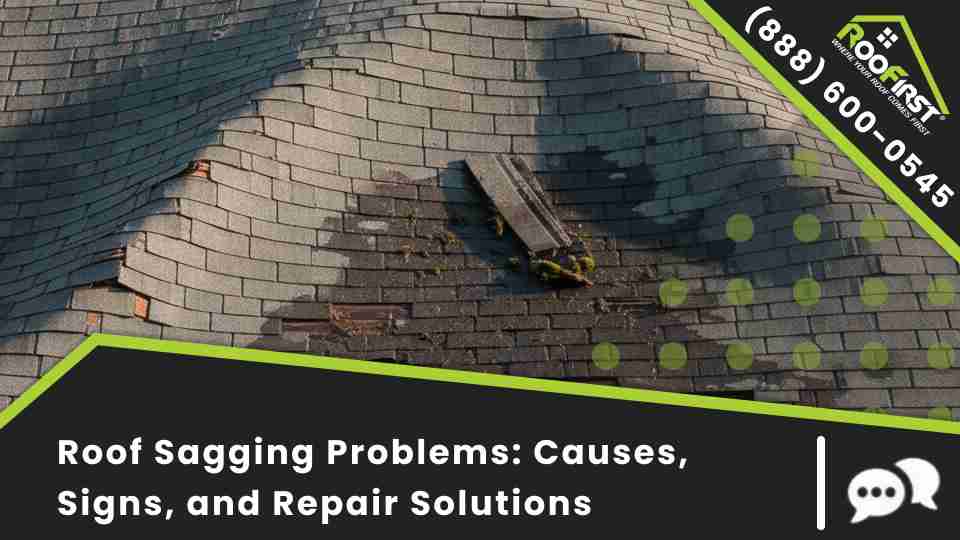
Are roof sagging problems creating visible dips in your roofline that signal serious structural concerns? Furthermore, a sagging roof indicates underlying damage to rafters, decking, or support beams that worsens without repair. Moreover, recognizing roof sag warning signs early helps homeowners address problems before costly structural failure occurs. Consequently, whether you need roof structural repair or a complete sagging roof fix, finding professional help for roof sagging problems near you protects your home and family. In addition, understanding roof sagging repair cost helps you budget for this critical maintenance before minor dips become major emergencies.
What Causes Roof Sagging Problems
Specifically, roof sagging problems develop when the structural components supporting your roof can no longer bear the load placed on them. Furthermore, a properly built roof distributes weight evenly across rafters, trusses, and load-bearing walls. Moreover, when any part of this system weakens, the roof begins to dip or bow visibly. Consequently, identifying the root cause determines the right approach to a lasting sagging roof fix.
Structural Overload and Weight Issues
Moreover, excessive weight on the roof structure is one of the leading causes of sagging. Specifically, multiple layers of old shingles add hundreds of extra pounds that the original framing was never designed to carry. Furthermore, heavy snow or ice accumulation during winter storms can exceed the roof’s design capacity and cause temporary or permanent deflection. Additionally, improper additions like solar panels or rooftop equipment installed without structural evaluation place concentrated loads on areas that cannot handle the extra stress. Consequently, structural overload creates roof sagging problems that worsen progressively with each passing season.
Water Damage and Construction Deficiencies
Similarly, moisture destroys structural integrity over time and is a primary contributor to sagging roofs. Specifically, chronic roof leaks saturate rafters and decking, causing wood rot that weakens load-bearing capacity. Furthermore, poor attic ventilation traps condensation that accelerates decay from the inside out. Moreover, failed flashing and ice dams force water into structural members where damage remains hidden until sagging becomes visible.
In addition, original building deficiencies contribute to long-term structural failure. Specifically, undersized rafters or trusses for the roof span cannot handle normal loads over decades of use. Furthermore, insufficient bracing between structural members allows gradual shifting under weight. Moreover, improper spacing of support columns or the use of low-quality lumber creates roof sagging problems that develop slowly over many years before becoming apparent.
Roof Sag Warning Signs Every Homeowner Should Know
Furthermore, recognizing roof sag warning signs early prevents minor issues from becoming dangerous structural failures. Specifically, from outside your home, look for a visible dip or curve in the roofline when viewed from the street. Moreover, a roof ridge that appears wavy instead of perfectly straight indicates structural movement beneath the surface. Furthermore, shingles that buckle or ripple in specific areas and gutters pulling away from the fascia both point to shifting caused by sagging.
Similarly, interior signs confirm that roof sagging problems are actively worsening. Specifically, ceiling cracks appearing or growing in upper-floor rooms suggest the structure above is shifting. Furthermore, doors and windows that suddenly stick or refuse to close properly indicate framing movement. Moreover, visible bowing of rafters or decking when you look inside the attic provides direct evidence of structural compromise. Consequently, any combination of these roof sag warning signs warrants immediate professional evaluation.
Roof Structural Repair Options
Furthermore, professional roof structural repair addresses the root cause of sagging rather than just the visible symptoms. Specifically, rafter and truss reinforcement is the most common approach, which involves sistering new lumber alongside damaged rafters to restore load-bearing capacity. Moreover, technicians add collar ties or knee braces for extra support and install steel plates at weakened connection points. Consequently, reinforcement provides an effective sagging roof fix when the overall structure is still fundamentally sound.
Similarly, damaged roof decking often requires replacement as part of a comprehensive roof structural repair. Specifically, rotted plywood or OSB sheathing sections are removed and replaced with new material over sound rafters. Furthermore, proper underlayment is installed before new sheathing, and adequate ventilation is ensured to prevent future moisture damage. Consequently, decking replacement restores the flat, solid surface your roofing material needs to perform correctly.
Roof Sagging Repair Cost Factors
Moreover, understanding roof sagging repair cost helps homeowners plan for this significant investment. Specifically, the extent and severity of structural damage is the biggest factor affecting your total price. Furthermore, the number of rafters, trusses, or decking sections needing repair directly impacts labor and material costs. Moreover, accessibility of damaged areas from inside the attic and whether temporary shoring is needed during repairs both influence the final estimate.
In addition, typical roof structural repair costs vary by scope. Specifically, rafter sistering runs approximately $150 to $400 per rafter, while truss repair or replacement costs $500 to $2,000 per truss. Furthermore, roof decking replacement ranges from $2 to $5 per square foot depending on material and accessibility. Moreover, full structural repair for severe sagging typically costs $2,000 to $10,000 or more depending on the extent of damage. Therefore, addressing roof sagging problems early costs significantly less than waiting for complete structural failure.
When to Call a Professional
Furthermore, roof sagging problems always require professional evaluation because structural integrity is at stake. Specifically, call a professional right away when you notice sudden or rapidly worsening sag in the roofline, cracking sounds coming from the attic or ceiling, or multiple interior warning signs appearing simultaneously. Moreover, sagging combined with active water leaks creates an emergency situation requiring immediate attention. Consequently, the National Roofing Contractors Association recommends immediate professional inspection for any visible roof sagging.
Similarly, when searching for roof sagging problems near you help, look for a licensed roofing contractor with structural repair experience, proper insurance covering structural work, and written estimates with a detailed scope of repair. Furthermore, ask for references from similar structural repair projects to verify their expertise. In addition, quality professionals always provide thorough roof inspections before recommending any structural repairs.
Preventing Future Roof Sagging Problems
Additionally, proactive maintenance prevents most structural issues from developing in the first place. Specifically, schedule annual roof inspections that include attic evaluation to catch early signs of structural stress. Furthermore, remove heavy snow accumulation promptly during winter storms before the weight exceeds your roof’s capacity. Moreover, address roof leaks immediately before water reaches structural members and causes hidden rot. Additionally, ensure proper attic ventilation to prevent moisture buildup that degrades wood over time. Consequently, never add extra roofing layers or heavy equipment without consulting a structural professional first. Therefore, consistent maintenance catches roof sag warning signs early and prevents costly structural damage down the road.
Final Thoughts on Roof Sagging Problems
In fact, roof sagging problems represent one of the most serious structural issues a homeowner can face. Moreover, recognizing roof sag warning signs like visible dips, interior cracks, and attic damage helps you act before the situation becomes dangerous. Furthermore, professional roof structural repair and a proper sagging roof fix restore your roof’s integrity and protect your home for decades to come.
Consequently, don’t ignore a sagging roofline or dismiss it as a cosmetic concern. Therefore, contact a qualified professional for roof sagging problems near you today and protect your home’s structural safety. In addition, understanding your roof sagging repair cost upfront helps you make informed decisions about this essential investment in your home.
Phone: (888) 600-0545
Email: info@roofirst.com
Website: https://roofirst.com/